Skip to content

QBCC 1199847/Family owned, made in Cairns

(07) 4057 5443
Cairns, QLD

Range of mesh, and what each one is for

Mesh is the part of a security screen you look through, and it is also the part that decides what the screen can and cannot do. We fit five.

This page is the comparison rather than the sales pitch: what each mesh is made of, what it is good at, and the point at which it stops being a security product. If you already know which product you want, the security doors page covers SCREENGUARD, PERFGUARD, Diamond Grille and Colonial Casting.

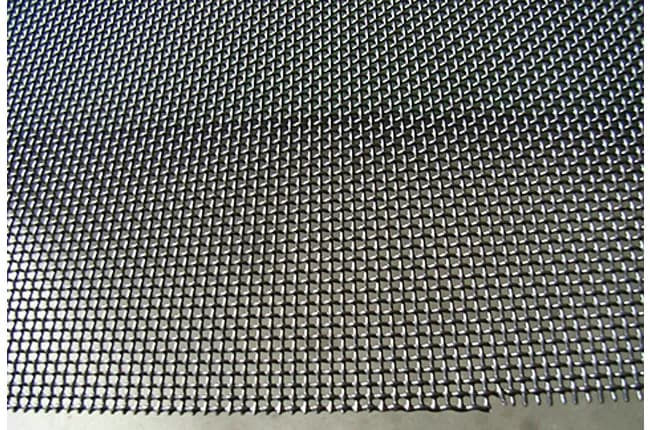
Close-up of woven marine-grade stainless steel security mesh

The current Australian Standard, AS 5039.1:2023, sorts security screens by how big the gaps in the infill are, and that turns out to be the most useful way to read the list below. Small aperture means nothing thicker than a 3 mm probe gets through, and the standard names perforated sheet and wire mesh as its examples. Medium aperture has to stop an arm, and names diamond screens. Large aperture only has to stop a body, and names cast panels. The same standard sets the limit worth knowing before any of it: a security screen is not intruder-proof, and how secure one ends up being depends on the screen, the way it is fixed to the building, the locking hardware and the strength of the frame behind it.

316 marine grade stainless steel mesh

Finely woven stainless in 316 marine grade, the alloy specified for corrosion resistance in salt air, and the mesh inside SCREENGUARD screens. It is woven tightly enough that the view through it stays clear, which is the usual reason people choose it over a patterned screen. Wire mesh is a small aperture infill under the current standard, so it keeps insects out as well as taking the impact and shear testing the manufacturer puts it through. Stainless is low maintenance rather than maintenance free, and the sheltered spots that rain never reaches are the ones that need a wash.

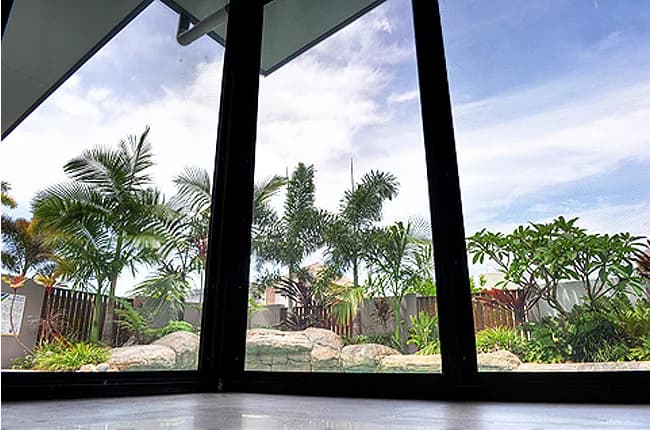
View from inside a home through black-framed security screens to a tropical garden with palms and a rock-edged pool

Perforated aluminium mesh

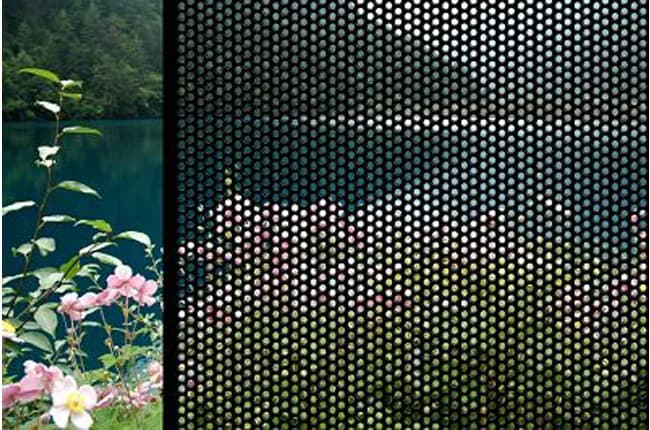
A 2 mm aluminium sheet, powder coated black and perforated to give about 40 percent view through. It is the mesh in PERFGUARD, and because the sheet is solid apart from the holes it is the one we list for privacy screening and sun screening as well as security, which is worth knowing for a west facing window or a room that looks straight onto the footpath. Perforated sheet sits in the same small aperture class as wire mesh, so insects are covered too. The trade-off is the view: 40 percent through reads noticeably darker than woven stainless, and that is the thing to look at in daylight before you commit.

Side by side comparison of a garden view seen directly and through black perforated aluminium screen mesh

Fibreglass mesh

The most common of the five and the standard infill in our flyscreens and behind Diamond Grille and Colonial Casting screens. It is soft, flexible and tightly woven, and it will not rust, rot or corrode, which is why it lasts in this climate. On its own it is an insect screen and not a security screen. In a Diamond Grille or a Colonial Casting door the security comes from the grille or the cast panel in front of it, and the fibreglass is there to keep the insects out. On a plain flyscreen, insects are the whole job.

Pet mesh

A thicker, stronger fibreglass that gives a little rather than tearing, made for households with a dog or a cat and for doors that take constant traffic. It goes wherever a standard fibreglass screen goes and it survives longer there. Like standard fibreglass it is an insect screen rather than a security mesh. If what you are really after is a pet door cut into a security door, read the trade-off on the security doors page first, because the industry position is that cutting the opening voids that door's compliance.

DVA one way vision mesh

DVA lets you see out while cutting down how much anyone outside can see in. The qualifier matters more than the feature, and it is the manufacturer's own: it is not considered to be a security product itself. That is why we fit it combined with a Diamond Grille or a Colonial Casting screen rather than on its own, which leaves the grille or the cast panel doing the security and the DVA doing the privacy. It suits a bedroom or bathroom window facing a neighbour or a footpath. One way vision works on a difference in light levels, so expect less of the effect after dark with the lights on inside.

Questions we get asked

Which of these meshes actually keeps insects out?

Stainless steel mesh, perforated aluminium, fibreglass and pet mesh all keep insects out. AS 5039.1:2023 defines a small aperture infill by a 3 mm probe, and it gives both wire mesh and perforated sheet as examples of that class. Fibreglass and pet mesh are insect screens by design. DVA is a privacy mesh and is normally fitted in front of a grille, so what stops insects there is whatever sits behind it.

Does the mesh on its own decide whether a screen is secure?

No. AS 5039.1:2023 states plainly that a security screen is not intruder-proof, and that how secure one turns out to be depends on four things together: the screen, the way it is fixed to the building, the locking hardware, and the strength of the existing door or window frame. The standard puts an obligation on the installer to assess whether that frame is suitable. Mesh is one part of four.

How do I tell a security screen from a safety or barrier screen?

Look for the label. AS 5039.1:2023 requires a permanent, indelible label showing the manufacturer, the brand, conformance to AS 5039.3 and the security level, positioned so you can still read it once the screen is installed. The National Security Screen Association puts it bluntly: an unlabelled product is not a security door. Ask us for the test certificate on whichever product you are considering.

Which mesh suits a bedroom window we might need to climb out of?

The mesh matters less here than how the screen opens, so ask us about a hinged or removable screen rather than a fixed one. AS 5039.1:2023 asks that occupant safety in a fire or other emergency is considered when security window screens are selected and installed, and Queensland Fire Department's home escape planning gives households the same advice about screens and bars.

Does stainless steel mesh need any maintenance in Cairns?

Yes. The Australian Stainless Steel Development Association describes stainless as low maintenance but not maintenance free, and suggests washing it whenever the window next to it needs washing. Rain does some of that for you, so the places to watch are the ones rain never reaches. SCREENGUARD also requires regular maintenance with SCREENGUARD Powawash to keep its 10 year warranty valid.